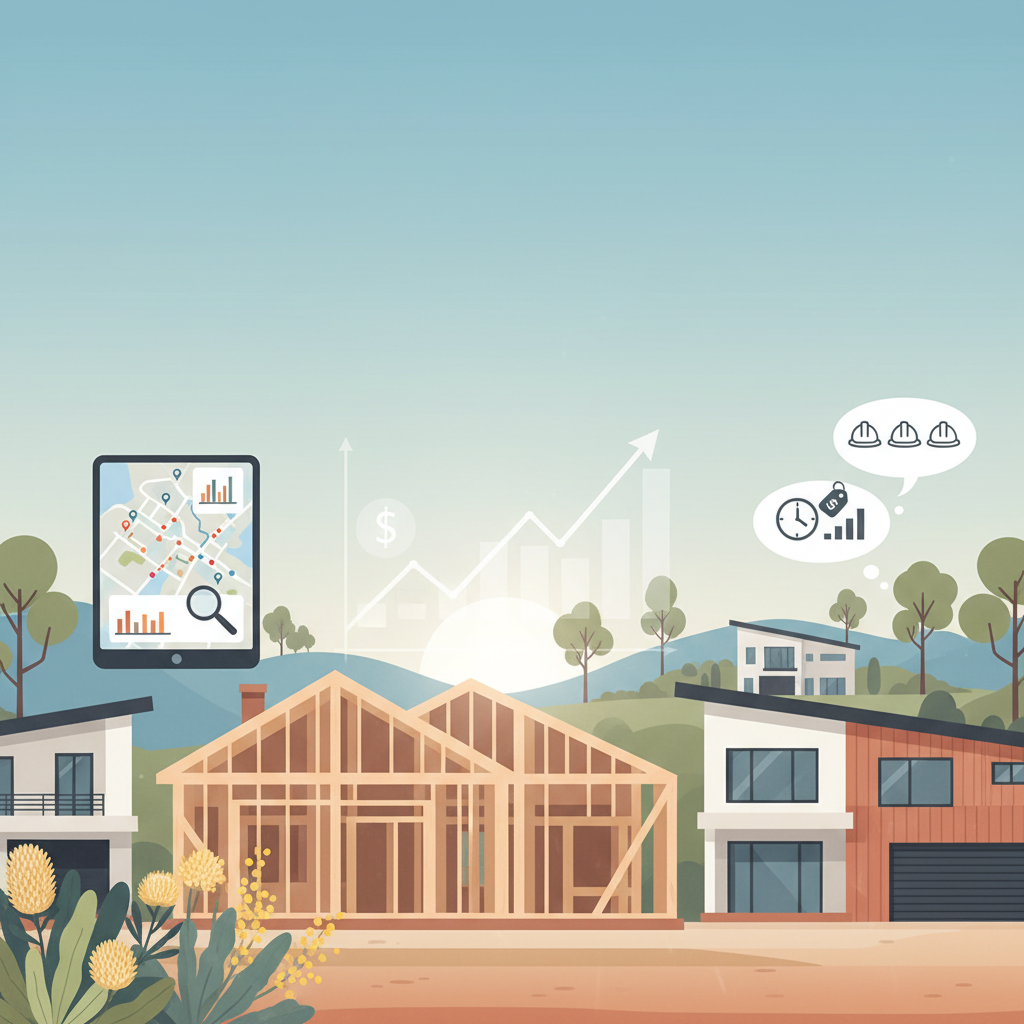
TL;DR: Australian home building costs have surged over 40% since the pandemic. You’ve seen a notable 3.7% increase in the year to February 2026—the fastest rise since late 2024. This escalation is primarily driven by global geopolitical conflicts pushing up material prices, with PVC pipes up 30-37% and cement up 25%. This makes careful budget planning more critical than ever for your Australian build.
Key Takeaways
- Australian residential construction costs rose 3.7% in the year to February 2026, the fastest increase since late 2024.
- Global geopolitical conflicts are a primary driver, causing significant price hikes for crucial building materials.
- Materials like PVC pipes have jumped 30-37%, and cement is up 25%, directly impacting your project budget.
- Ongoing labour shortages and increasing regulatory demands also contribute to the escalating cost environment.
- You must plan with larger contingency budgets and use tools for real-time cost tracking and builder quote comparison.
- Using platforms like HomeBuildBudget is essential for accurate cost estimates and managing your budget in this volatile market.
Australia’s Surging Building Costs in 2026: What You Need to Know
If you’re an Australian homeowner planning a new build or renovation, you’re facing a tough market. Residential construction costs are still climbing in 2026. New data shows a 3.7% increase in the year to February 2026. That’s the fastest rise since late 2024, according to industry reports. This isn’t new. Building costs have soared over 40% since the pandemic began, making many dream homes harder to afford.
If you’re planning to build or renovate, you need to understand why these costs are rising. It’s not just local demand anymore; global events now significantly impact your project’s bottom line. You’ll need accurate cost estimates and a solid budget to get through this volatile market.
Why Are Australian Construction Costs Rising So Sharply?
Australian construction costs are rising sharply because of both international and local pressures. Think geopolitical instability, ongoing supply chain issues, and a tight labour market. Global events, like conflicts in the Middle East and Eastern Europe, keep disrupting manufacturing and shipping. This creates a ripple effect on material availability and pricing worldwide. For a deeper dive into how global conflicts are specifically impacting Australian build costs, refer to our related post: Middle East Conflict Drives Double-Digit Build Cost Spikes.
Here at home, a persistent shortage of skilled tradespeople across Australia means higher wages and longer project timelines for you. Rising fuel and energy costs also add to transport and manufacturing expenses, which you’ll ultimately pay for. All these factors make it a complex environment where predicting and managing costs is a big challenge for you as a homeowner.
Budgeting Tip: Start by getting a realistic baseline estimate. A dedicated tool can help. HomeBuildBudget’s Cost Calculator gives you detailed construction cost estimates, tailored by room type, material grade, and crucially, suburb-level labour rates across over 2,500 Australian suburbs. This granular data, updated quarterly from ABS and industry sources, provides a solid starting point for your budget.
How Are Material Price Increases Impacting Your Budget?
Building material price increases are directly and significantly impacting your project budget. Key components are seeing double-digit percentage jumps. Geopolitical conflicts and global supply chain issues have pushed up the cost of essential raw materials and finished goods. For instance, PVC pipes, vital for plumbing and drainage, have seen an alarming 30-37% increase, according to recent industry analyses. Similarly, cement, a foundational material, is up by around 25%.
These increases aren’t isolated. Timber prices, while off their peak, are still much higher than pre-pandemic levels. Steel products also continue to be influenced by global demand and energy costs. These material cost surges mean the “bricks and mortar” for your project are simply more expensive to buy, even with efficient construction practices.
Budgeting Tip: To stay ahead, you need to track your spending against initial estimates in real time. Our Budget Tracker feature lets you monitor actual expenses, compare them to your allocated budget, and receive real-time alerts if any category exceeds its threshold. This proactive approach helps you spot cost overruns early and make necessary adjustments before they get out of hand.
The Role of Labour Shortages and Regulatory Changes
Beyond materials, an ongoing shortage of skilled labour and evolving building regulations are also driving up Australian home building costs. The Australian construction industry has long struggled with a lack of qualified tradespeople – from carpenters and electricians to bricklayers and plasterers. This scarcity drives up labour rates, as builders compete for available talent, which impacts the overall cost of your project. According to the Housing Industry Association (HIA), skilled labour shortages remain a top concern for builders nationwide, leading to both higher costs and longer project timelines.
On top of that, updates to national building standards and energy efficiency requirements are also adding to project expenses. The National Construction Code (NCC) periodically introduces stricter mandates, like the recent NatHERS (Nationwide House Energy Rating Scheme) rating increases. Meeting these higher energy efficiency standards often means you need additional insulation, specialised glazing, or more advanced heating and cooling systems – all of which add to your construction costs. While these changes give you more sustainable and comfortable homes in the long run, they do increase your upfront investment.
What Does the 2026 Cost Forecast Mean for Your Project?
The 2026 cost forecast suggests Australian home building costs will keep facing upward pressure. This means you should prepare for elevated expenses for the foreseeable future. While the pace of increases might fluctuate, underlying issues like global instability, persistent supply chain challenges, and strong housing demand aren’t likely to resolve quickly. Industry experts predict costs will stay
Related Articles
Middle East Conflict Sparks Double-Digit Build Cost Spikes in Australia
Middle East escalations are driving double-digit increases in Australian building and renovation costs, impacting project viability nationwide.
Australian Construction Costs Rise 6.2% in Q2 2026: What First Home Buyers Need to Know
ABS data reveals residential construction costs jumped 6.2% in Q2 2026 due to material shortages and labour competition. What it means for your budget.